Which AI Level Are You? (Why Most Are Stuck at Level 1 or 2)
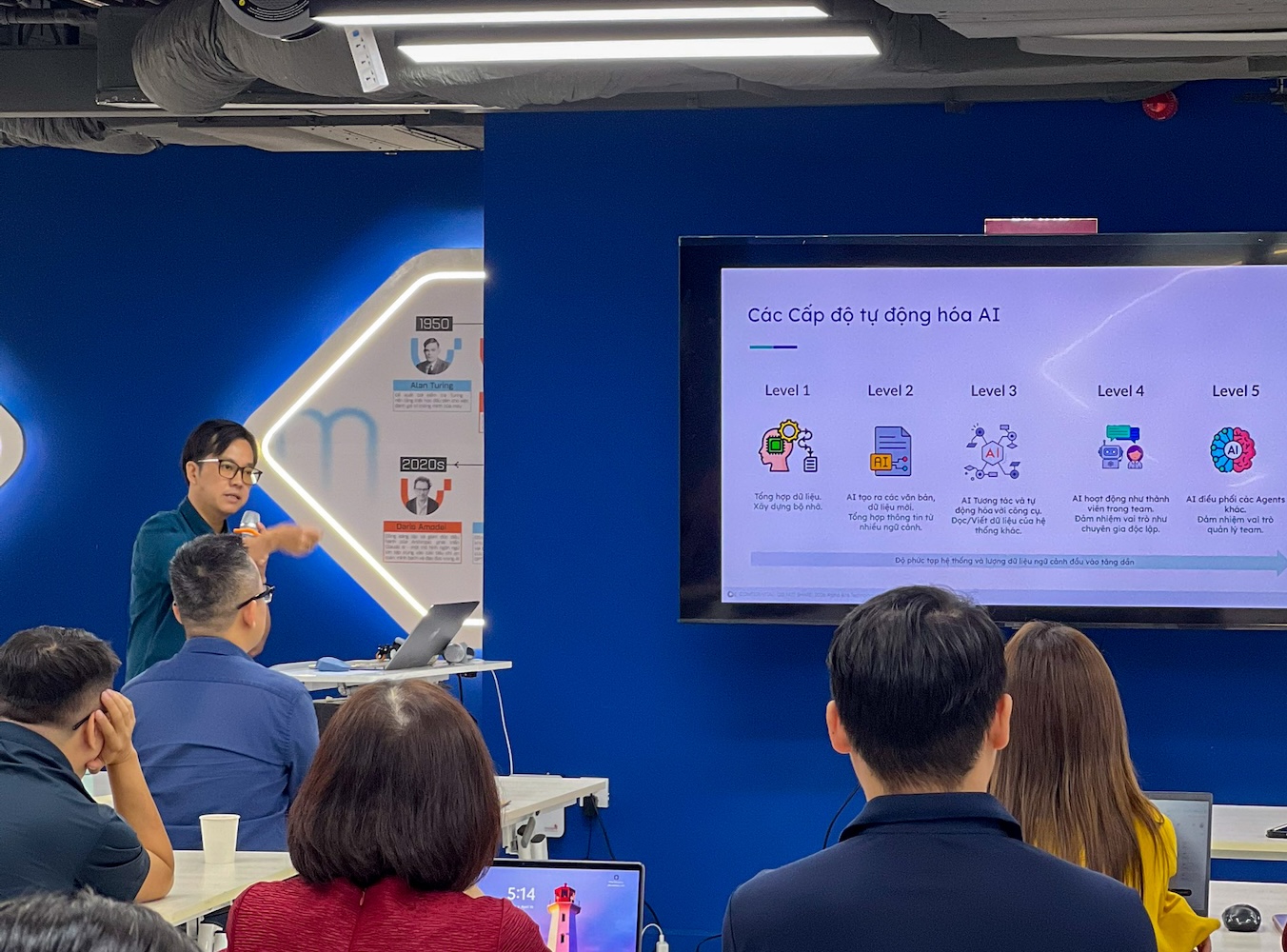
Last week, I shared this framework for the first time with a small audience at our AI Application in Operations and Legal seminar.
Since then, it has become one of the simplest ways I know to explain the AI landscape to beginners, especially business leaders who say they are already "using AI" but are not yet seeing real operational leverage.
Most teams are hovering around Level 1 or Level 2. They are treating AI like a super-powered search engine, which is already useful, but they are still far away from the operational scale that starts to appear at Levels 4 and 5.
Here is the framework I use.
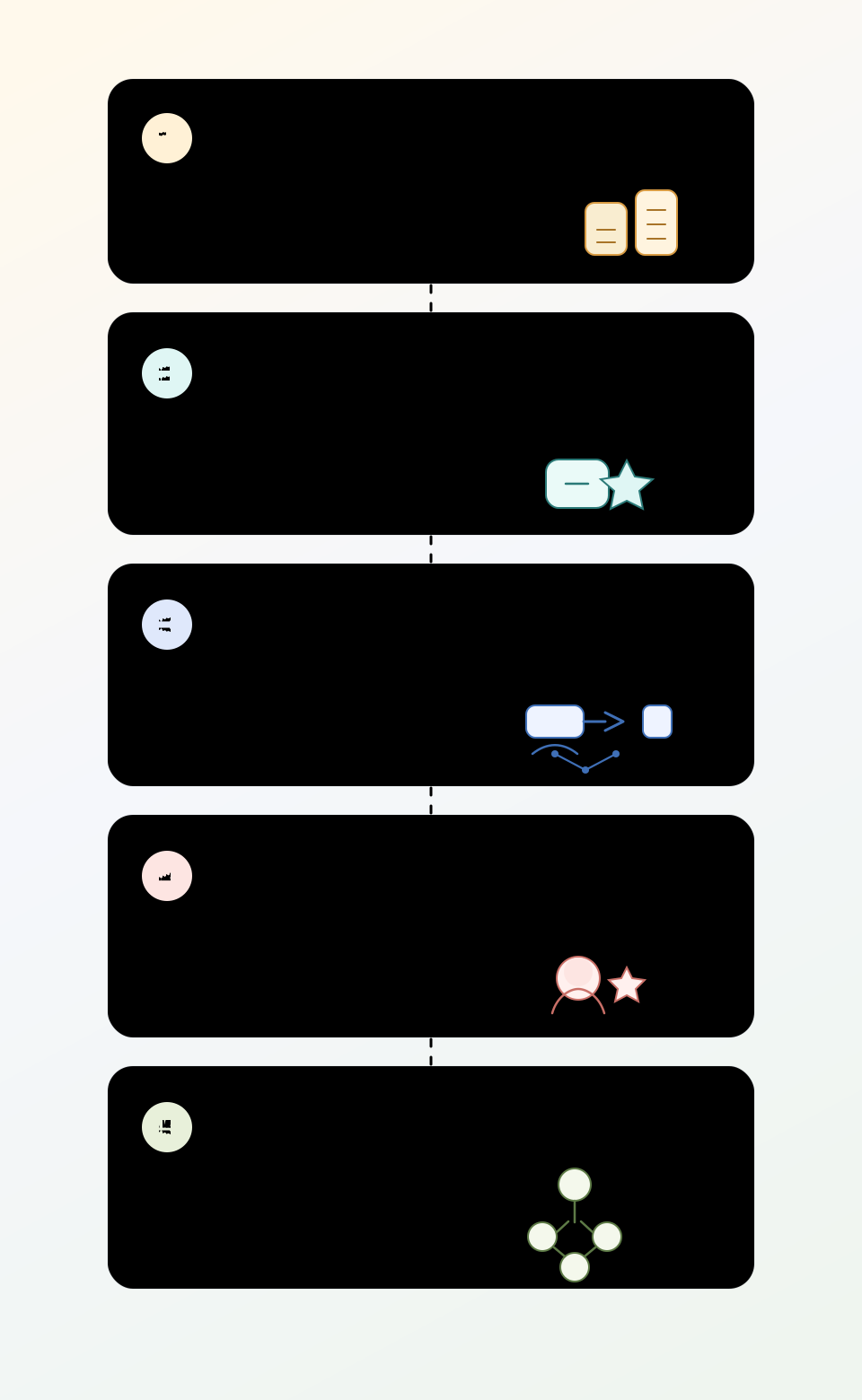 The framework moves from AI as memory to AI as orchestrator.
Level 1: The "Memory" Builder
If you are uploading files, Youtube, Links, Images, PDFs into a chat window and asking the AI to summarize them, you are at Level 1.
This stage is about taking fragmented, unstructured internal knowledge such as SOPs, policies, meeting notes, legal templates, or scattered documents and building a centralized memory for the AI. You are not automating much yet. You are teaching the AI your context.
Typical tools at this stage: NotebookLM, ChatGPT, Gemini, Grok, Perplexity
This is a good starting point. Most organizations should do this first. But we should be honest: this is still mostly assisted retrieval.
Level 2: Contextual Generation
At Level 2, you are no longer just asking the AI to find information. You are asking it to produce something new from the context you gave it.
That could mean:
- generating a draft memo from internal policies
- writing a report from multiple uploaded files
- synthesizing customer feedback into themes
- creating new operating documents based on previous examples
The tools may still look almost identical to Level 1. The difference is the behavior. At Level 2, new memory can be generated.
This is where many leaders stop and conclude they are "doing AI transformation." In reality, they are still working inside a single chat box.
Level 3: External Interaction
This is the point where AI stops living in isolation.
At Level 3, your AI can read from and write to external tools. It can interact with CRMs, spreadsheets, email systems, design tools, finance systems, or internal databases. It can also be given sharable skills, such as acting like a financial analyst, operator, or web designer, and use those skills in connected workflows.
This is also where concepts like MCPs, or Model Context Protocols, start to matter because the AI needs structured ways to access other systems.
Most people get stuck here.
Why? You can no longer rely on copy-paste between tools. You need clean inputs, clear permissions, and explicit process logic and perhaps some basic technical knowhow to get your API keys and stuff.
Level 4: The Independent Team Member
At Level 4, AI is no longer just a tool you prompt occasionally. It starts behaving like an independent team member with a domain-specific role.
Instead of using one general chatbot for everything, you begin deploying specialized AI systems that can handle a full job from start to finish inside a clear scope. For example:
- building a landing page and deploy end to end
- qualifying leads
- drafting a compliance checklist
- preparing internal analysis for a decision-maker
Typical tools at this stage:
- Lovable
- Google AI Studio
- Bolt
- Copilot
Again, the point is not so much the tool. The point is that the AI is now operating as a bounded specialist, not as a general assistant waiting for your next prompt.
Level 5: The AI Manager
This is the current frontier of workflow automation.
At Level 5, one AI orchestrates multiple other AIs or automations to execute complex, multi-step operations. It becomes a manager of systems rather than a single worker.
During the workshop, I demoed an event-management pipeline, where all the steps are handled by AI with some human inputs (me!).
At this level, AI can:
- generate the event workflow
- verify incoming payment emails
- send QR-code tickets
- check attendees in
- collect and synthesize post-event feedback
No human needs to keep copying information from one tool into another.
Typical tools at this stage:
- n8n
- Node-RED
- OpenClaw
- Antigravity
- Claude Cowork
- Cursor
- Build-Your-Own AI Agent System
The Real Question
So be honest: which level are you actually at?
If your team is still manually copying and pasting data between tools, there is a very high chance you are still at Level 1 or Level 2, even if you are using the latest model.
The tools will keep changing. New model names will come and go. But the real upgrade is not the model. It is the operating mindset.
Level 5 does not begin when you discover a smarter AI tools. It begins when you redesign work so AI can coordinate it end to end.
That is the shift most teams have not made yet.