Sand Battery Simulation with AI
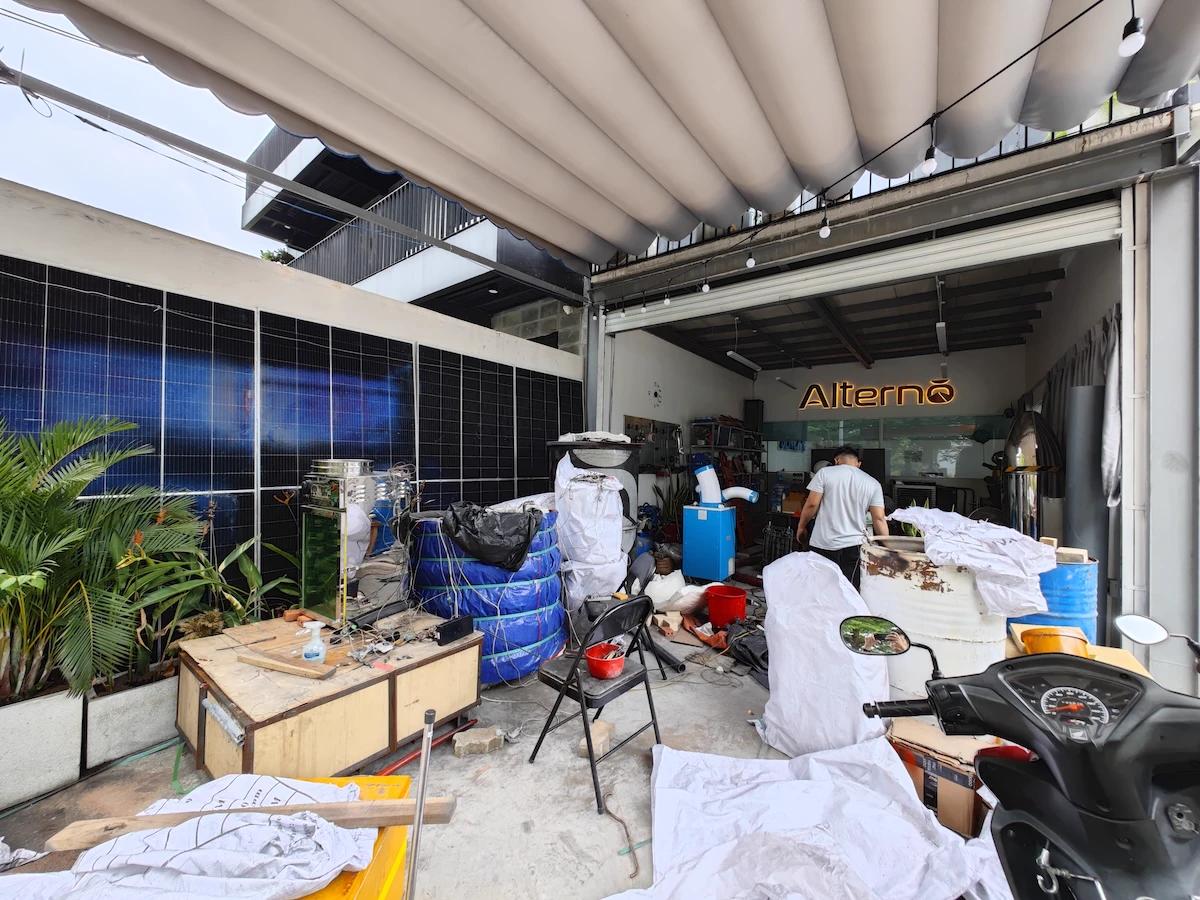
Think back to the early days of the Sand Battery, when almost nobody knew what a sand battery — or thermal storage in general — even was. Before you can sell a new technology, you have to make people see it. Heat soaking silently into a tank of sand is about as invisible as engineering gets, and our biggest challenge in those days wasn't the physics; it was the storytelling.
I often look back and wish I'd had today's AI tooling then. With tools like Antigravity and Opus 4.6, building the explanation website and the thermal simulation visuals would have taken an afternoon. Instead, we reached for something far more physical.
The 3D Printed Models
Our answer was to 3D-print the battery. We modeled the internal structures — from the heating elements to the insulation boundaries — and printed them piece by piece, so that an investor holding the model could trace with a finger exactly where the heat entered, where it lived, and where it left. It was the most direct way we had to convey the true origin of the technology.
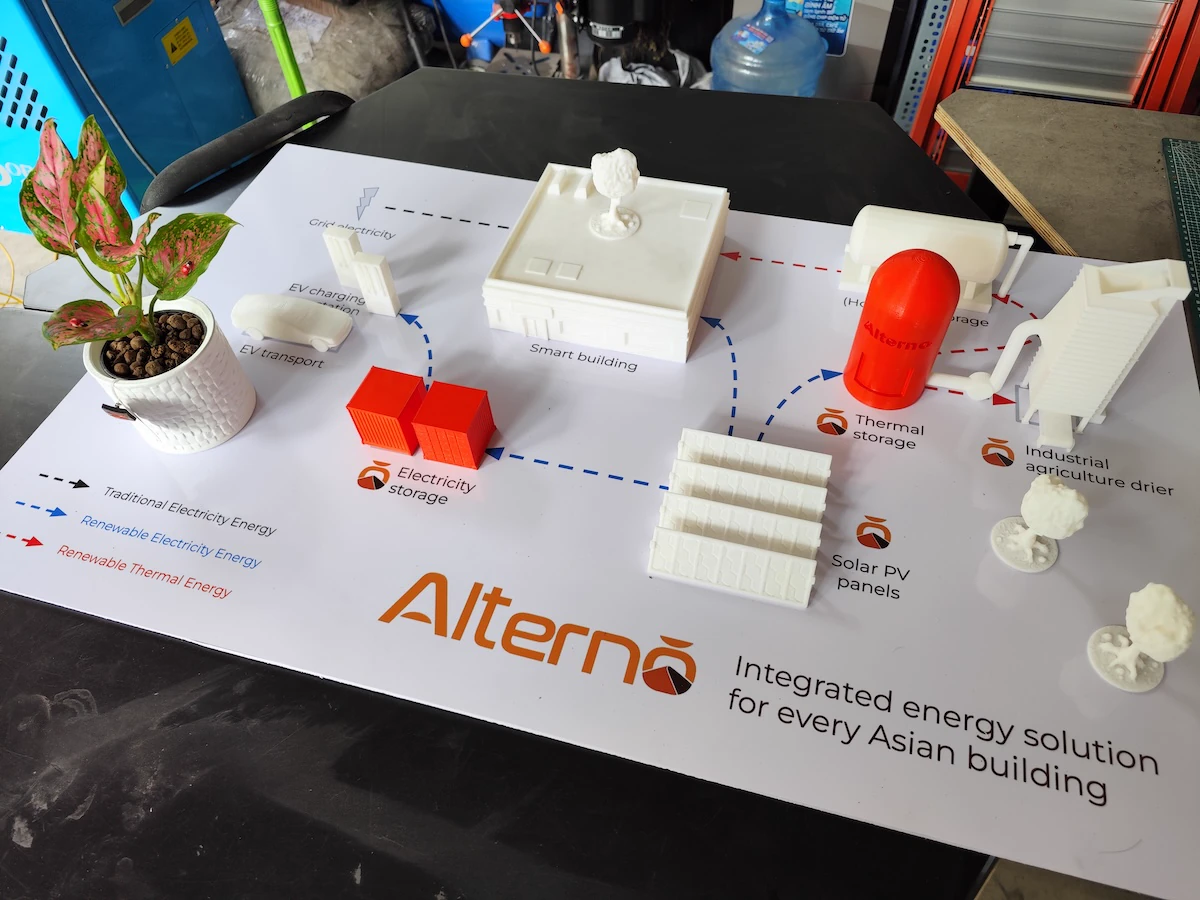
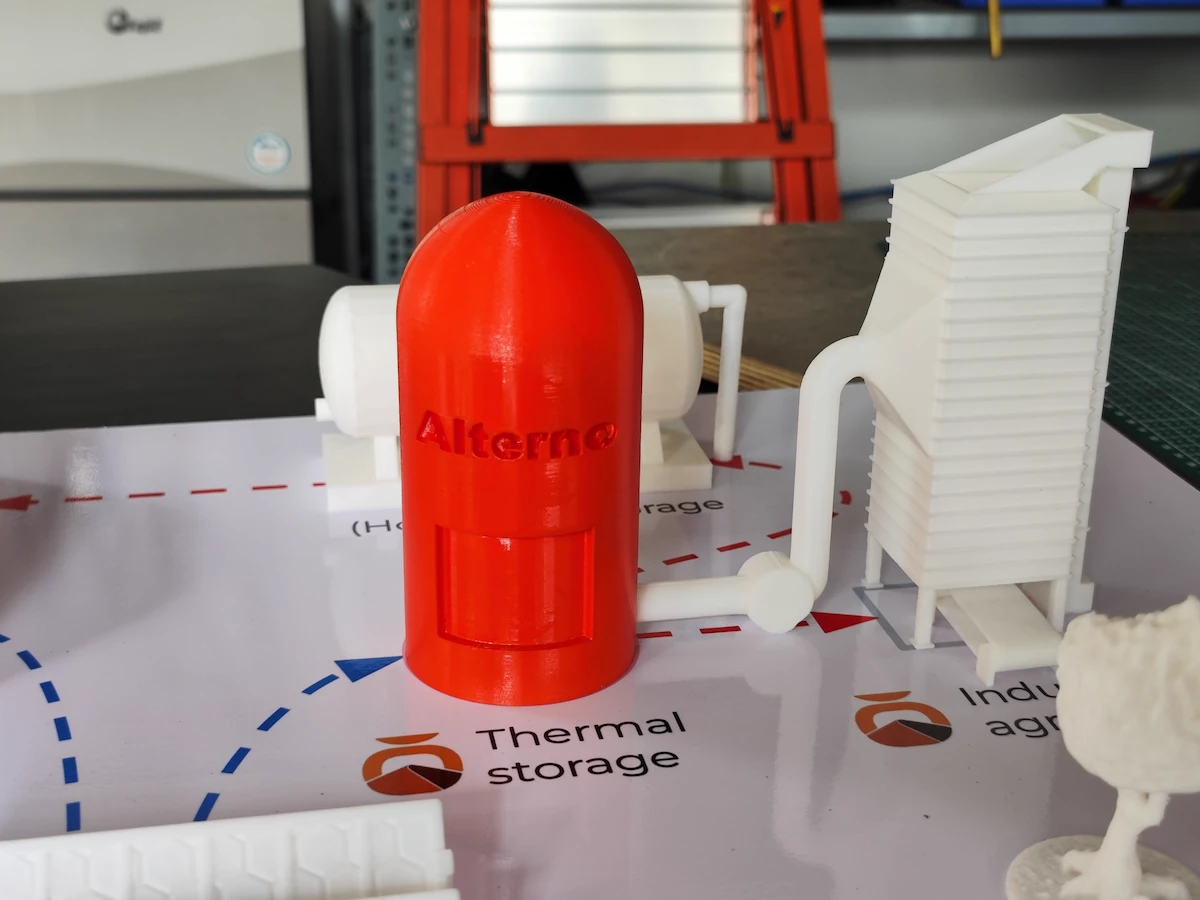
Those tactile models did their job — early investors and partners could finally hold the concept in their hands. They were the physical precursors of the digital models we rely on today.
The AI Advantage
Today, the difference is night and day. With agents orchestrating complex workflows, you no longer need a team to spin up a fully interactive simulation environment or a polished product website — a single developer with the right AI stack can do what once took specialized departments weeks. You can judge the result yourself in our interactive Sand Battery experiment, built exactly this way.
But it doesn't stop at interactive illustrations. With the profound level of machine intelligence we have access to today, running real Computational Fluid Dynamics (CFD) simulations has become easier than ever. We can move far past early physical models and directly create true-to-life digital twins - a capability that NVIDIA recently made vastly more accessible. An entire physical simulation lab can now be built and tested completely in silico, optimizing thermal boundaries long before we even touch a grain of sand or a heating coil.
The contrast becomes stark when you look at what happens without that capability. Take alterno.net: as of mid-2026, the flagship product page still carries a 2024 copyright footer and a wall of template "verified owner" reviews on a product that has no price and no checkout — placeholder demo content, documented in detail in SAND Part 21. And when the same team did ship something new, the SandBlock repository showed it was assembled from boilerplate by an external contractor (Part 20). Real simulation capability, it turns out, is hard to fake: either your team can build a digital twin of a thermal system, or your storefront quietly freezes in 2024.
Technology moves fast. Those who adapt to the true AI era build the future; those who don't are left maintaining a static WordPress page.