Sand Battery Hot Water for Homestays and Resorts: A Practical Use Case (SAND - Part 4)
In Part 3, I highlighted the Sand Battery’s "almost" zero-emission advantage , showing how it achieves zero-carbon operation while minimizing lifecycle emissions.
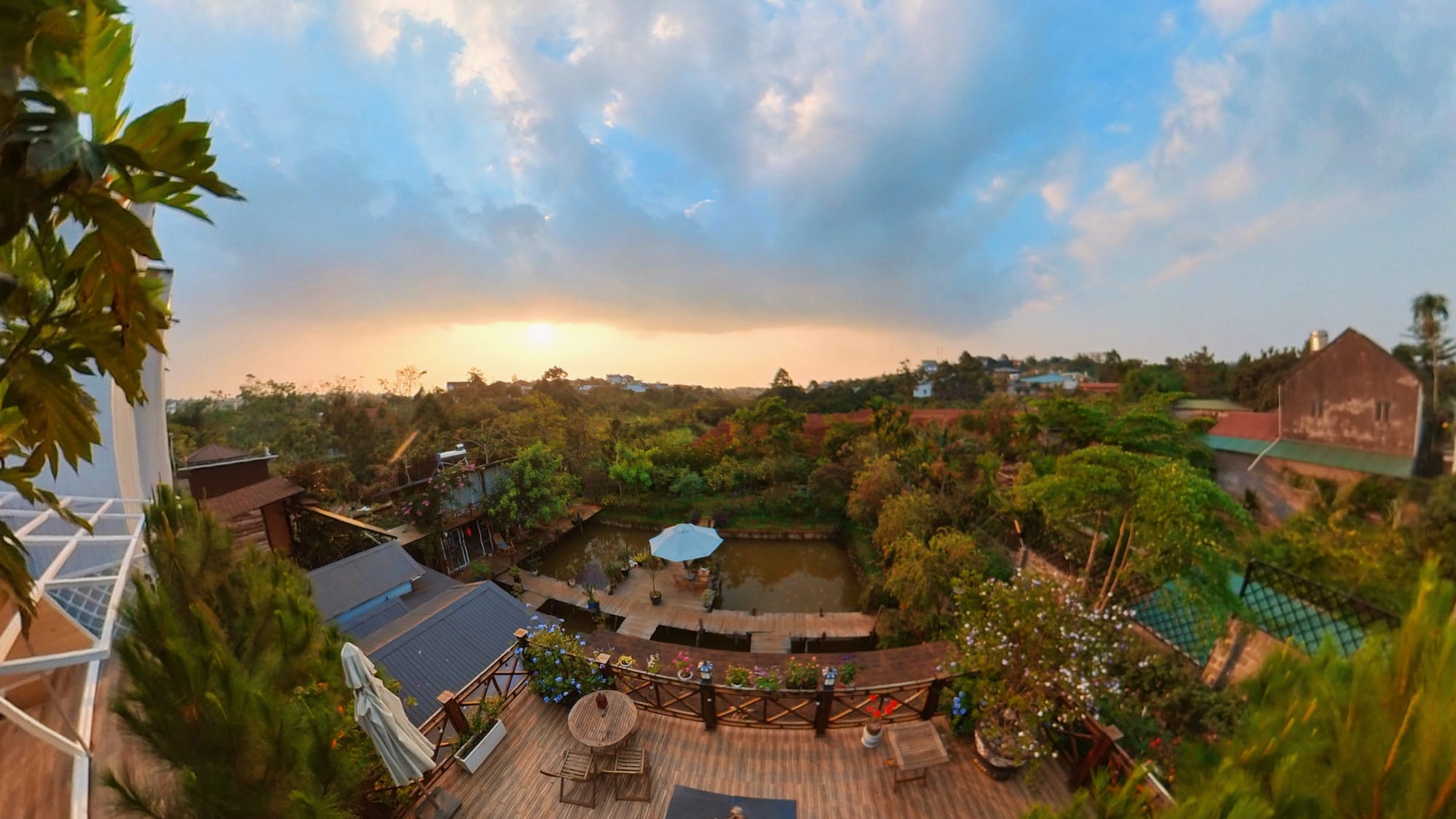
Now, in Part 4, we’ll explore a residential use case: supplying hot water for a homestay in Da Lat, Vietnam — a picturesque city with a cool climate, averaging 15–20°C year-round, where hot water is essential for guest comfort. This homestay operates 24/7, is off-grid, and aims for zero-emission energy use, aligning with the region's eco-tourism ethos. We’ll break down the hot water demand, design a Sand Battery system to meet it, ensure zero-emission operation, and analyze the cost benefits, demonstrating the technology’s potential for residential applications.
Section 1: Hot Water Needs for a Da Lat Homestay
Da Lat’s cool climate makes hot water a necessity for showers, cooking, cleaning, and heating in a homestay. A typical mid-sized homestay with 5 rooms, hosting 10 guests daily, requires hot water 24/7, especially during peak morning (6–9 AM) and evening (6–9 PM) usage.
- Per Guest Usage: Each guest uses ~50 liters of hot water daily (showering, washing), heated to 40°C from an ambient 15°C (25°C temperature rise).
- Total Daily Demand: 10 guests × 50 liters = 500 liters of hot water daily.
- Energy Required: Heating 500 liters by 25°C requires ~14.5 kWh (using the specific heat of water: 1 liter × 1°C = 1.163 Wh, so 500 × 25 × 1.163 = 14,537.5 Wh or 14.5 kWh). Adding a 10% buffer for pipe losses, we estimate 16 kWh/day.
- 24/7 Requirement: The system must deliver hot water on demand, with storage to cover peak usage periods, and operate off-grid to align with the homestay’s remote location and sustainability goals.
Section 2: System Design for Off-Grid Operation (Sizing Theory)
Sand Battery Sizing
To meet the 16 kWh/day demand, we size the Sand Battery to store 20 kWh, accounting for 90% extraction efficiency and heat loss (5–10%/day). A 20 kWh Sand Battery can store heat at 500°C in a compact 200 kg sand block (based on sand’s specific heat and prior prototype data: 800 kg for 100 kWh, Part 1). This unit is roughly 0.5 m³ (50 cm × 50 cm × 200 cm), fitting easily into a small utility room.
Solar Integration
A 5 kWp solar array (10 panels, 500 W each) can generate ~20 kWh/day in Da Lat (4 peak sun hours, despite frequent cloud cover). This charges the Sand Battery during the day (10 AM–2 PM) at 98% efficiency (19.6 kWh stored). A 2 kWh lithium battery, charged by solar, powers the fan and electronics (0.5 kWh/day for fan operation), ensuring off-grid functionality.
Heat Extraction System
A small fan (50 W) circulates air through the Sand Battery to a heat exchanger, transferring heat to the homestay’s water tank (500 liters, insulated). The system delivers hot water at 40°C on demand, with extraction efficiency of 90% (17.64 kWh available from 19.6 kWh stored, covering the 16 kWh demand). The Sand Battery’s low heat loss (5–10%/day) ensures heat is available overnight, with the insulated tank maintaining water temperature for peak usage.
Section 3: Achieving Zero-Emission Operation
- Charging: The Sand Battery is charged using solar panels, producing zero carbon emissions (as detailed in Part 3).
- Storage: The passive storage process in the Sand Battery emits no carbon, relying on sand’s natural properties and insulation (Part 3). Heat loss is minimized, ensuring efficiency without emissions.
- Extraction: The fan and electronics are powered by the solar-charged lithium battery, maintaining zero-emission operation (Part 3). The 2 kWh battery, recharged daily by solar, covers the 0.5 kWh/day fan demand, decoupling the system from any fossil fuel-based grid.
- Lifecycle Emissions: As noted in Part 3, over a 20-year lifespan, this is negligible and well within required standards.
Section 4: Cost-Benefit Analysis
Initial Costs
- Sand Battery: A 200 kg unit costs ~$2,000.
- Solar Panels: 5 kWp array at $1,000/kWp = $5,000.
- Lithium Battery: 2 kWh battery at $200/kWh = $400.
- Installation and Piping: ~$1,000.
- Total: $8,400.
This pricing is only estimated for the calculation purpose, not final pricing.
Savings
A typical off-grid homestay might use a diesel generator for hot water, consuming 2 liters/day (16 kWh at 8 kWh/liter) at $1/liter, costing $730/year and emitting ~1,900 kg CO2/year (2.6 kg CO2/liter × 730 liters). The Sand Battery system has zero fuel costs, zero emissions during operation, with maintenance at ~$50/year (fan, battery replacement every 10 years). Annual savings of $730 cover the $8,400 cost in ~11.5 years. With Vietnam’s eco-tourism incentives (e.g., tax breaks, grants), this could drop to 8–9 years.
Additional Benefits
- Eco-Tourism Appeal: Zero-emission operation enhances the homestay’s appeal in Da Lat, attracting eco-conscious guests and justifying premium rates.
- Grid Independence: Off-grid capability ensures reliability in remote areas, avoiding power outages.
- Scalability: Additional Sand Battery units can support larger homestays or resorts — to simplify things, the system scales linearly.
The Sand Battery’s application in a Da Lat homestay demonstrates its versatility for residential use, delivering 24/7 hot water, off-grid, with zero-emission operation.
In Part 5, I'll compare Lithium Battery versus Sand Battery in details.
Stay tuned!